Light Tank: New Opportunities Accompanied by New Challenges
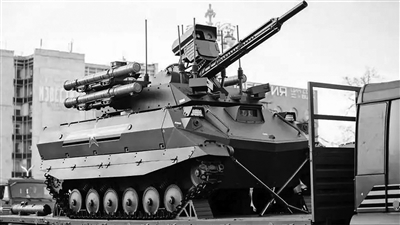
Russian "Uranus -9" unmanned tank. Information picture
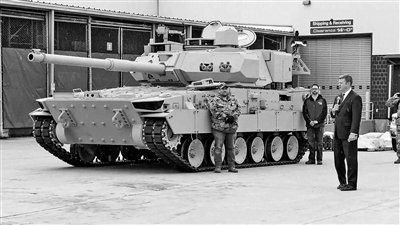
Griffin Ⅱ light tank prototype of American General Dynamics Ground System Company. Information picture
After a lapse of half a century, the start button has been pressed again for the development of new tanks in the United States. Not long ago, the bidding result of the US Army’s "Mobile Protective Firepower" (MPF) was released, and the "Griffin" II light tank successfully won the bid and became the next generation light tank of the US military. Since the appearance of M1 main battle tank in 1970s, the development of new tanks in the United States has been stagnant. The bid for Griffin II is the biggest step they have taken in the development of new tanks in recent years.
Since the Gulf War, new anti-tank weapons and platforms, such as portable anti-tank missiles, helicopter gunships, special ground attack aircraft and unmanned aerial vehicles, have appeared one after another, and the scene of heavy tank cluster operations is gone forever. However, in recent years, in many local armed conflict battlefields, light tanks, with their good maneuverability and protection, have become the decisive force for ground penetration in many cases.
According to media reports, only this year, Britain, Germany, France, the United States, Russia and India have launched light tank development plans, so that the "lonely" tanks once again glow with vitality and vitality. Why does lightweight become a new trend of tank development? Can light tanks continue to be popular in the international defense market?
In this issue, let’s find out.
Along the way, success is also "light" and failure is also "light"
On the morning of September 15th, 1916. The somma river in France is foggy.
The battle started. British "steel monsters" rampaged on the battlefield, tearing the German trench defense. Tanks, which will dominate the battlefield in the future, made their debut in the smoke of the First World War. Its overwhelming advantage in the land battlefield makes it quickly become the main battle weapon of the armies of various countries.
Early tanks are usually divided into light, medium and heavy types according to the total combat weight and gun caliber. Before World War II, light tanks, as combat vehicles supporting infantry, undertook the function of assisting combat. Light tanks also harvest a large number of orders with low cost. The Soviet Union first produced more than 10,000 T-26 tanks, and the United States produced 27,000 light tanks, which once ushered in a prosperous period.
The good times didn’t last long. During World War II, light tanks were losing ground on the battlefield because their firepower and protection were far inferior to those of medium tanks. In the early days of the Soviet Patriotic War, the German army turned thousands of Soviet light tanks into scrap iron on the battlefield. In the end, it was the medium and heavy tanks represented by T-34 and KV-1 that turned the Soviet army around.
Frustration on the battlefield made light tanks "fall out of favor" quickly. In the 1960s, the main battle tank, a modern combat tank with off-road performance and heavy firepower, appeared, which pushed the light tank out of the main equipment of land warfare. In the army of many countries, light tanks even evolved into reconnaissance tanks, tank destroyers, paratroopers and landing vehicles and other types of equipment.
However, the main battle tank is not perfect. Because of its complex technology and high combat weight, the long-range maneuverability of ground troops equipped with main battle tanks is greatly limited. Take the American M1 main battle tank as an example, its total combat weight is over 50 tons, and the C-17 large transport plane can only transport one at a time. In addition, the cost of main battle tanks has been high. In 1986, the fiscal year price of the US M1 main battle tank was US$ 2.22 million, which increased to US$ 2.56 million in 1988.
Just as countries are struggling with how to "slim down" tanks, a bigger crisis is coming. During the Vietnam War, the M48 Barton main battle tank frequently fell into the mud pit, which became the operational burden of the US military. During the Gulf War, thousands of tanks in Iraq were destroyed by precision guided weapons on the roads. During the Chechen War, Russian T-80 tanks were mired in street fighting and frequently blocked by crude individual rocket launchers … The combat capability of the main battle tanks was questioned.
In this case, the armies of various countries have transformed, reducing the proportion of main battle tanks and changing wheeled armored vehicles into light tanks. Sweden has also developed the CV90 tracked armored fighting vehicle with excellent comprehensive performance based on the CV90 light tank, which has been welcomed by European countries. Its total combat weight is only half that of the active main battle tanks in Europe and America, but it is equipped with the main guns with the same firepower; Stealth design and advanced auxiliary defense system make up for the defect of survivability.
The diversified development of the army’s operational concept and the elimination of the attack mode of the tank cluster have made the light tanks slowly return to the field of vision of the armies of various countries. With the rapid development of various technologies in the field of military industry, tanks can have good comprehensive performance while being light in weight. This is also regarded as an important direction of tank development.
The military trade is hot, and the land weapon returns to the center of the stage.
In 2018, Pindar Indonesia announced that the Philippines and Bangladesh had ordered 40-50 Kaplan tanks from it.
In 2020, the Indian army, which has been committed to improving its mountain combat capability, adopted an order plan for 20 Russian-made "Octopus -SDM1" tanks to equip mountain troops.
In recent years, light tanks have been "popular" in the international defense market, mainly because the new generation of light tanks, which have undergone technological innovation, have good maneuverability and information situational awareness, as well as firepower and protection capabilities. The batch equipment of light tanks can effectively improve the army’s ground combat capability.
In 2009, the ground combat vehicle plan launched by the US Army was stopped due to budget adjustment. In 2015, the United States continued to put forward the "Mobile Protective Firepower" (MPF) project, aiming at providing a 30-ton-class new light tank with direct fire support for light infantry units. This light tank must not only have certain firepower, protection and maneuverability, but also meet the requirement of "C-17 large transport aircraft transport at least two at a time" to ensure the rapid deployment capability in large-scale wars in the future.
At the same time, Russia planned to install the amphibious light tank "Octopus -SDM1" for airborne troops. The tank is equipped with a 125mm caliber artillery and missile integrated system, with brand-new automatic correction devices, such as artillery sight, ballistic computer, laser rangefinder and automatic target tracking device, and can be transported by ships and planes. "Octopus -SDM1" light tank has excellent maneuverability and combat effectiveness, which not only continues the traditional concept of firepower first, but also reduces the total combat weight to 18 tons. Once it came out, it attracted the attention of the international equipment market.
除此之外,模块化设计也为轻型坦克加分不少。土耳其和印度尼西亚合作研制的“卡普兰”坦克,可以通过模块化在无人遥控炮塔与有人炮塔吊篮间切换,根据任务需求快速转换主炮口径,拓宽火炮的高低射界,成为许多山地国家的优选。
能力升级,适应未来有待战场检验
不久前,印度国防研究与发展组织(DRDO)秘书萨西什·雷迪博士表示——DRDO将与拉森和图布罗公司(LT)共同开展印度国产新型轻型坦克的研发,为轻型坦克在2023年投入生产做好准备。
在这份印度自行开发轻型坦克的计划中,作战要求非常具体——总重量不超过25吨,至少配备一门105毫米口径主炮,具备主动防护系统,可携带无人机……而我们从中能看到的是,传统的“机动、防护、火力”坦克设计三角正在发生改变。
2022年6月,巴黎。
欧洲国际防务展开幕。世界主流坦克供应商齐聚一堂,携最新成果参展。从他们展示的先进坦克中,我们可窥得未来轻型坦克的四项基本能力:
First, build a digital cockpit.
Simple and quick operation is an important index of weapons and equipment. In the traditional tank cockpit, there are many instruments and equipment, and the information is complicated. Long-term operation is easy to cause occupant fatigue, and it is difficult to cope with the ever-changing battlefield.
In order to simplify the data information, the M1A2 tank in the United States is equipped with a comprehensive display, which makes the crew have a more intuitive feeling of the battlefield information. The conductor and gunner can know all kinds of images, data and real-time scenes of the battlefield in an all-round way just by sitting in front of the monitor, which is more conducive to combat command.
Second, build an unmanned platform.
In the future, tanks equipped with more weapon systems and information equipment will be remotely operated by tank commanders in safe places like unmanned combat aircraft.
The unmanned transformation of the tank will not only greatly reduce the number of soldiers’ casualties, but also further liberate the space inside the tank-only protecting the vehicle control system and engine will make the tank smaller and lighter, thus reducing fuel consumption and cost. At present, the appearance of Russian "Uranus -9" unmanned tank has attracted the attention of military fans all over the world.
Third, optimize stealth design.
Anti-tank weapons emerge one after another, which puts a great test on the survivability of tanks on the battlefield. Various new types of protective armor are constantly emerging, but they still can’t keep up with the development speed of anti-tank weapons. How to turn tanks into low detectable targets has also become a major research direction in the world.
Poland’s world’s first stealth tank PL-01 can adjust the surface to a temperature close to the surrounding environment through dense infrared probes and thousands of adjustable tile armor around the car body. It is said that the tank can also change its infrared characteristics and disguise itself as a car under the infrared detection of the enemy.
Fourth, combat information sharing.
Future combat is a "war under high-tech conditions", and all combat units need to be connected into a combat whole to realize unified information processing and sharing. Under the joint operation system, tanks are no longer isolated armored units, but a node, a terminal and a fierce attack and defense platform of battlefield information network.
The French "leclerc" tank adopted the battlefield management system for the first time and made it have real-time combat capability. The commander can know the battlefield environment, GPS positioning, enemy attack position and other information through intelligent control equipment to calculate the terrain, time, position and deployment. With highly advanced fire control equipment, "leclerc" tank can achieve the first hit rate as high as 95%.
Experts predict that in the future, battlefield light tanks will provide fire support with the main battle tanks in assault and circuitous battles, annihilate enemy light armored vehicles and main battle tanks, and provide armored support for infantry in areas where the main battle tanks cannot be deployed. It remains to be seen whether the natural advantages of light tanks can become the winning sword in the war under high-tech conditions after being integrated with high-tech in the future. (Tian Shikai, Zhang Yaocun, Zhao Changlong)
Source: Liberation Army Daily